
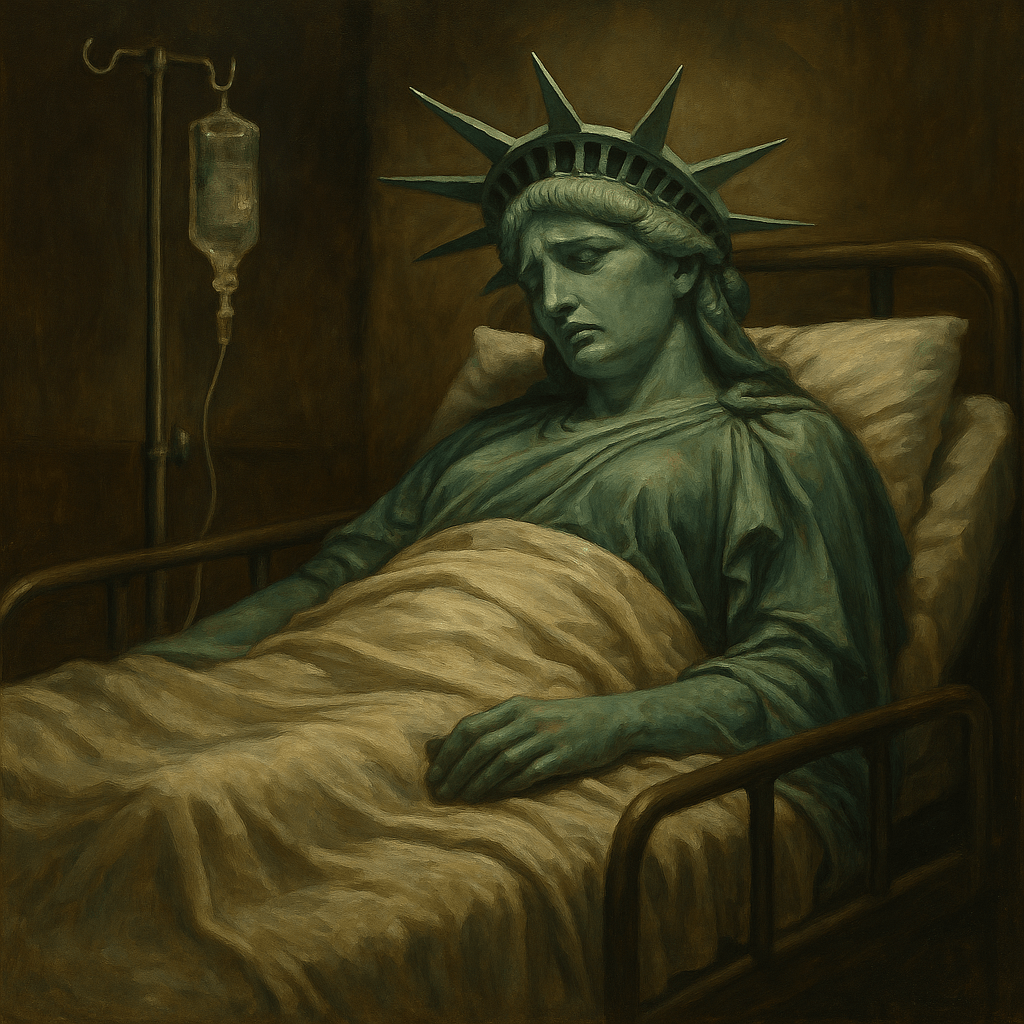
We’ve Seen This Playbook Before
The MAGA movement isn’t inventing something new. History is full of examples of leaders who came to power through legal means, then hollowed out democracy from within. Napoleon Bonaparte turned the French Republic into an empire after a coup in 1799. Adolf Hitler leveraged the Reichstag Fire of 1933 to suspend civil liberties and ram through the Enabling Act, giving himself dictatorial powers under a veneer of legality. More recently, Viktor Orbán in Hungary has rewritten election laws, gutted the courts, and monopolized the media, leaving his opposition alive in name but powerless in practice.
Each case follows the same pattern: weaponize a crisis, undermine institutions, purge opponents, and use propaganda to sell it all as “restoring order.” Trump and MAGA are following the same script.
The American Version of the Playbook
Cultural Capture: Trump has already pressured institutions like the Smithsonian to “remove improper ideology,” complaining that exhibits focus too much on slavery and injustice instead of American greatness (ABC News). Law Enforcement as a Weapon: Trump encouraged ICE and Border Patrol to ignore laws, even promising pardons for illegal actions (ProPublica). In June 2025, he invoked emergency powers to send 4,700 troops into Los Angeles over immigration protests, overriding state leaders (Associated Press). Policing Speech: From calling the press the “enemy of the people” to threatening to deport foreign students who protest, MAGA’s goal is not free debate. It is chilling dissent (ACLU). Checks and Balances Hollowed Out: Congress rarely checks Trump. Republican lawmakers treat oversight as betrayal. The Supreme Court has overturned precedent on abortion, gutted regulatory authority, and recently granted presidents broad immunity for “official acts,” effectively lifting Trump above the law (SCOTUSblog).
What “Managed Democracy” Looks Like Here
Put all this together, and the U.S. starts to look less like a democracy and more like a system engineered to guarantee one faction’s rule:
Elections as Theater: Voter suppression, gerrymandering, and state-level refusal to certify Democratic wins could ensure permanent Republican victories. Civil Service Purges: “Schedule F” would let Trump fire tens of thousands of career officials and replace them with loyalists (The Guardian). Justice as a Political Tool: The DOJ and courts become instruments to protect Trump and punish enemies. Propaganda Over Facts: With right-wing media as a megaphone and independent outlets sidelined, the public narrative tilts permanently in MAGA’s favor (Columbia Journalism Review). Emergency Powers as Normal: From troops in cities to suspending civil liberties, what was once extraordinary becomes the baseline (The Atlantic).
This is the definition of “managed democracy.” Elections still happen, but the outcomes are so tilted that real competition disappears.
How Close Are We?
The uncomfortable truth: we are already partway there. The Supreme Court’s ruling on presidential immunity all but guarantees Trump could act without legal consequence if re-elected (SCOTUSblog). Military deployments in Los Angeles show a willingness to bypass state sovereignty (AP). The purges of the civil service are planned and ready to go (Guardian).
In short: the infrastructure for minority rule exists. MAGA does not need to “take over” in the future. They are already testing and normalizing the tools of authoritarianism. The U.S. has not fully crossed into autocracy yet, but every month that passes without accountability narrows the exit ramp.
Why It Might Be Too Late
Democratic backsliding is rarely reversed. Once courts are stacked, civil servants purged, and opposition media sidelined, it becomes nearly impossible to rebuild fair competition. Hungary’s opposition has been locked out of power for over a decade despite free elections, and Russia’s opposition exists only in exile or prison. The U.S. is not there yet, but the momentum is strong and the guardrails that could stop it (Congress, the courts, even public outrage) are already bending.
A Strategy for Those Who Still Care About Democracy
That leaves one blunt reality: if Americans want to preserve a functioning democracy, they need to vote as if democracy itself is on the ballot. That means adopting a “blue no matter who” approach in national elections.
Even conservatives who genuinely believe in free markets, limited government, or traditional values should consider this. Why? Because in a real democracy you sometimes lose a policy argument, and then you fight harder next time. In an authoritarian system, you lose your ability to argue at all. The courts, the press, and the ballot box are captured.
If you want a society where debate is possible, where you can disagree openly without fear, then voting for the only party that still supports free elections is not about liking their platform. It is about defending the ground rules that make disagreement meaningful.
And here is where the data matters. The Economist Intelligence Unit has already downgraded the U.S. to a “flawed democracy.” Freedom House has steadily lowered America’s scores on political rights and civil liberties. Poll after poll shows that around 80% of Americans, across parties, believe democracy is under threat. In fact, a 2024 Georgetown University poll found 81% of voters worried about the state of democracy. A Data for Progress survey in 2025 showed only 52% think democracy is working well. Even a Reuters/Ipsos poll in August 2025 found that 57% of U.S. adults say democracy is in danger, with concerns about gerrymandering shared across party lines.
Put plainly: Americans across the spectrum see the danger. “Blue no matter who” is not about loving Democrats. It is about ensuring America remains a place where opposition is possible at all.

 BoxingWithGod